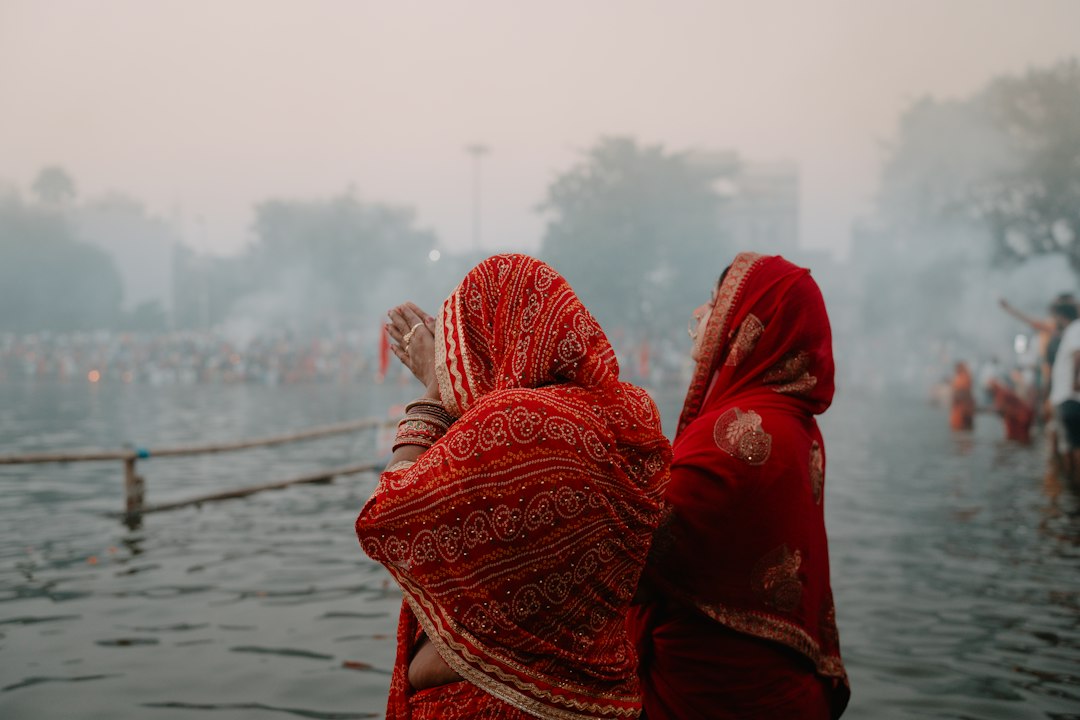
Chhath Puja falls across four days this year — Nahay Khay on 13th November, Kharna on the 14th, the evening Sandhya Arghya on the 15th, and the sunrise Usha Arghya closing it all on 16th November 2026. Few festivals in India carry the quiet intensity of Chhath: a 36-hour fast without water, held in devotion to Surya, the sun god, and Chhathi Maiya. For the Purvanchal and Bihari households who observe it — many with roots just a few hours from Varanasi itself — it is also, unmistakably, a festival of new clothes. If you are shopping for a Banarasi saree for Chhath Puja this year, one fabric from our weavers’ looms suits the occasion with unusual precision: Banarasi tissue silk.
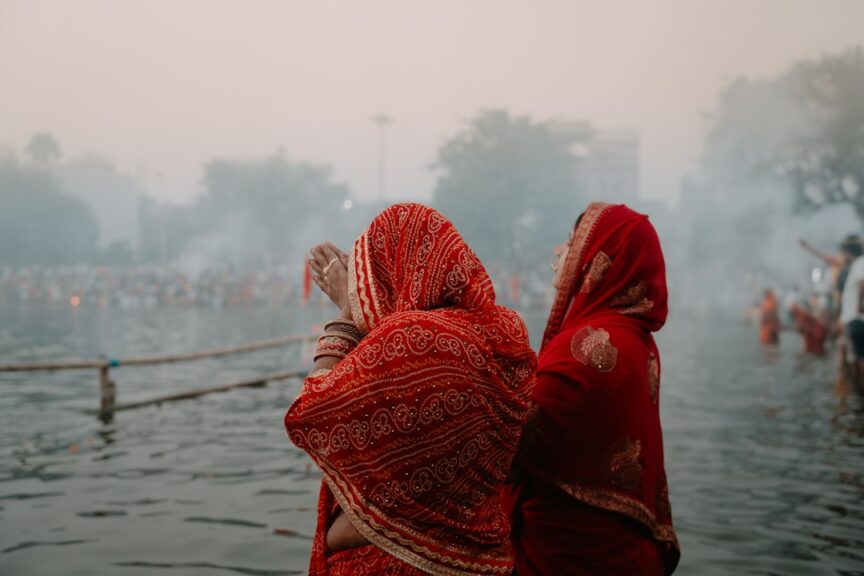
Photo by Sudhakar Chandra on Unsplash
Why Chhath Puja Calls for a Banarasi Tissue Silk Saree
Chhath is a festival built entirely around the sun — the setting sun on Sandhya Arghya, the rising sun on Usha Arghya, and the golden light that frames both. Tissue silk, woven with a fine metallic thread through its warp, suits this symbolism naturally: unlike a dense silk with a flat sheen, a handwoven Banarasi tissue silk saree has a translucent, shimmering quality that genuinely catches and throws back light, the same effect that makes it glow under diya flame or early morning sun. It is also considerably lighter than a full Katan silk, which matters on a festival built around fasting, long aartis, and moving between the ghat and home across four demanding days.
Understanding the Fabric: Tissue Silk, Katan Silk, and Soft Silk
Tissue silk is woven with a fine, sheer silk base interlaced with real gold or silver zari thread, giving it a translucent, light-catching finish that is noticeably airier than a standard Banarasi weave. It drapes with soft movement rather than structure, suiting a festival with so much standing and moving built into its rituals. For the Kharna evening puja at home, or the family gathering once the fast breaks, it gives you festive shimmer without any real weight on the body.
Katan Silk, woven from pure twisted mulberry silk, is the heavier, more ceremonial choice — the saree many women reserve specifically for the Usha Arghya morning, when the whole family gathers for photographs after the fast finally ends. Its dense zari border and structured drape hold their shape through a long, significant morning in a way lighter fabrics simply can’t replicate.
Soft Silk sits in between — more body than tissue, less heft than Katan — and is a forgiving option if this is your first time buying a Banarasi piece specifically for Chhath. A Chiffon Banarasi saree, meanwhile, is worth considering for Nahay Khay, the festival’s first and most understated day, when a simple, breathable drape is all the occasion asks for.
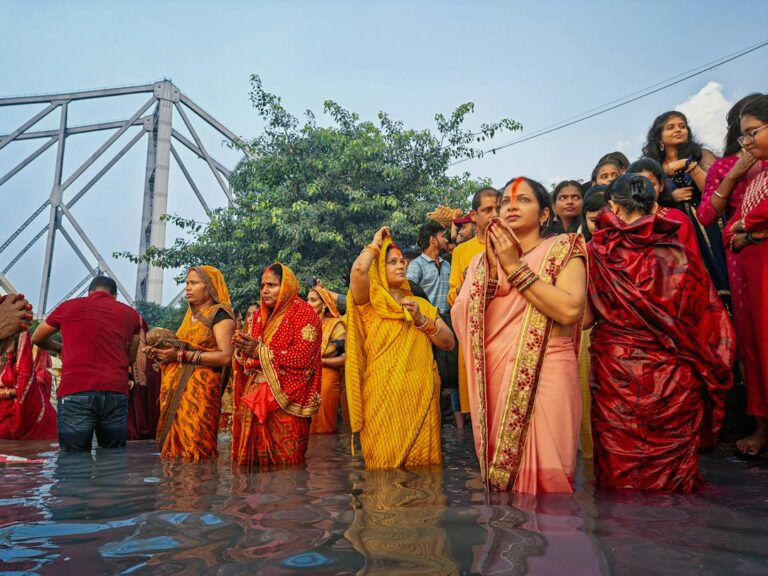
Photo by Rohit Sharma on Unsplash
Matching Your Saree to Each Day of Chhath
Chhath isn’t one event but four, each with a different rhythm, so it helps to think through the festival day by day rather than choosing one saree to repeat throughout:
- Nahay Khay: Keep it simple — a plain cotton or lightweight Chiffon Banarasi in an unadorned shade suits this purification day’s mood of restraint.
- Kharna: The evening puja at home, before the 36-hour fast begins, is where a Soft Silk or Tissue Silk saree in warm gold or ivory feels right — festive, yet light enough for an evening of cooking and prayer.
- Sandhya and Usha Arghya at the ghat: For the river rituals themselves, most vratis (women observing the fast) reach for practical, easy-to-manage fabrics given the hours spent standing in water. Save your handwoven silk for home and the celebration after.
- The family celebration after Usha Arghya: Here a tissue silk saree earns its place — the fast has broken, prasad is shared, and it’s traditionally when parents gift a new saree to a daughter or daughter-in-law. This post-fast moment, captured in family photographs, is what most women are really shopping for.
The Best Colors for a Chhath Puja Saree
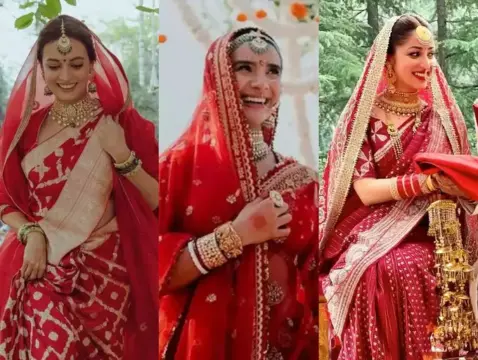
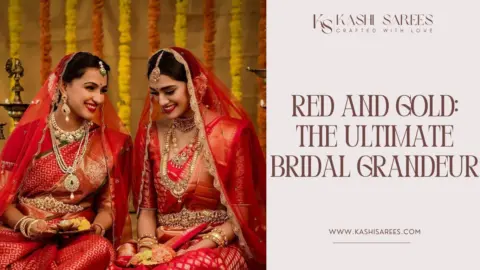
Yellow, red, and orange are considered the most auspicious shades for Chhath, tied directly to Surya and the festival’s devotion to the sun. A golden-yellow or marigold tissue silk saree, with its zari catching the light, leans into this symbolism more naturally than almost any other choice. Deep red with a gold border is a classic alternative for the Usha Arghya morning, while a softer ivory-and-gold combination suits the more devotional mood of Kharna evening.
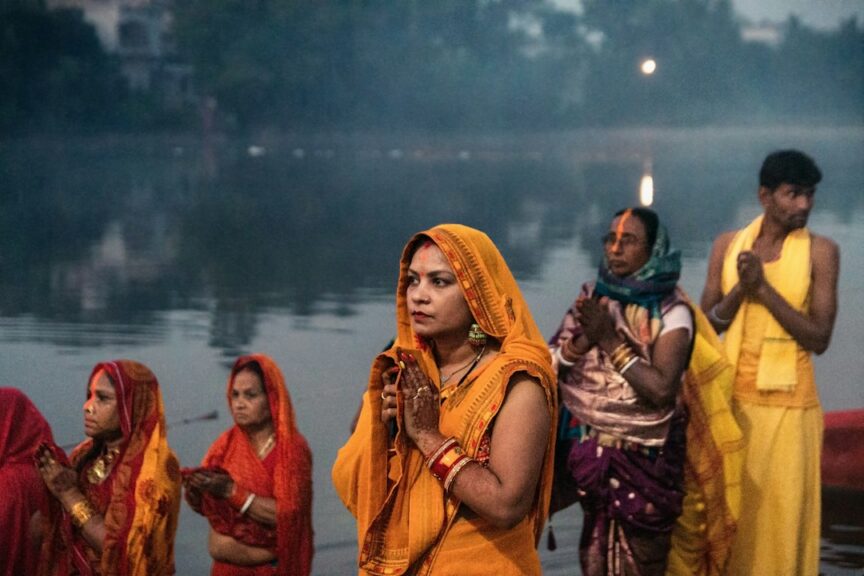
Photo by Uttarayan Saha on Unsplash
Styling Tips for Your Tissue Silk Banarasi Saree
Chhath favours grace over glamour, so a few styling choices keep the look devotional and appropriate rather than overdone:
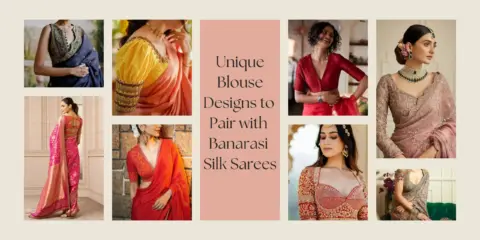
- Blouse: A solid-colour silk blouse in gold, maroon, or deep green keeps the tissue silk’s sheer shimmer as the focus.
- Jewellery: Simple gold jhumkas, a slim chain, and bangles suit the festival’s restrained mood far better than heavy bridal pieces.
- Draping: An opaque underskirt in a matching or contrast tone keeps the sheer drape looking polished rather than see-through in daylight.
- Finishing touches: A simple bindi and a low bun with fresh flowers complete the look without distracting from the zari.
Caring for Your Handwoven Banarasi Silk Saree
A genuine handwoven tissue silk saree is delicate by nature, so it rewards a little extra care after the festival:
- Dry clean only — tissue silk’s sheer weave and metallic zari can both be damaged by home washing.
- Store flat or loosely folded in a soft muslin cloth, never plastic, since the fine fabric creases and yellows easily under moisture.
- Keep perfume and hairspray away from the fabric itself — spray these before draping, as tissue silk marks more easily than denser weaves.
- Iron on the lowest silk setting, with a thin cotton cloth between the iron and the zari, or better still, steam it instead.
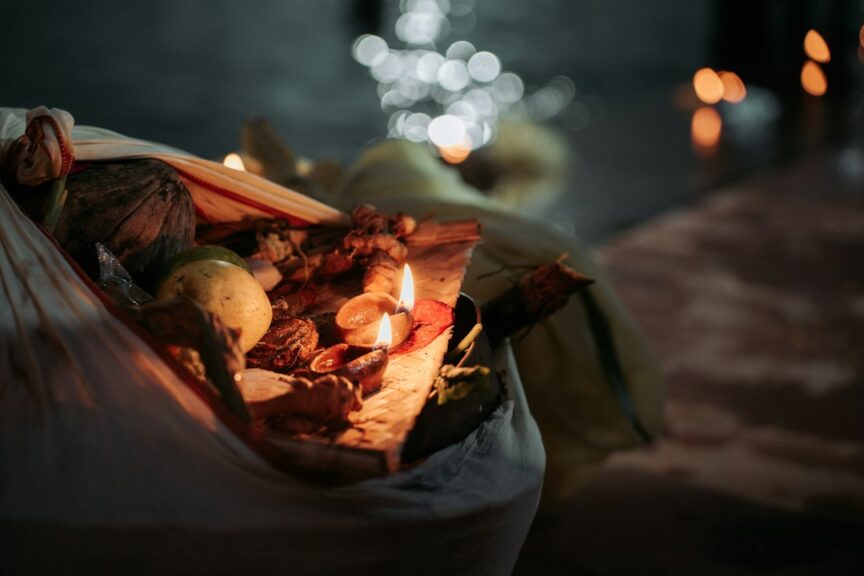
Photo by Sudhakar Chandra on Unsplash
Frequently Asked Questions
Is Banarasi tissue silk suitable for standing at the ghat during Arghya?
Most women prefer a lighter cotton or chiffon for the actual riverside rituals, given the hours spent in and near water. Tissue silk suits the Kharna evening puja at home and the family celebration once the fast ends.
What’s the difference between tissue silk and organza?
Both are sheer and lightweight, but tissue silk is defined by the metallic zari thread woven through its base, giving it a golden or silvery shimmer that plain organza doesn’t have.
Can I wear Katan silk instead of tissue silk for Chhath?
Yes — many families do, especially for the Usha Arghya morning photographs, since Katan is heavier and holds its structure through a long, significant morning.
Shop Chhath-Ready Banarasi Sarees at Kashi Sarees
Every saree we sell is handwoven by weaver families in Varanasi — the same city where Chhath’s devotion to the rising and setting sun has been honoured for generations just downstream on the Ganga. Whether you’re choosing a tissue silk piece for the family celebration, a Katan Silk saree for the Usha Arghya morning, a Soft Silk option for Kharna, or a Chiffon drape for Nahay Khay, explore our full shop to find the handwoven piece that will carry your family through this Chhath — and the many after it.