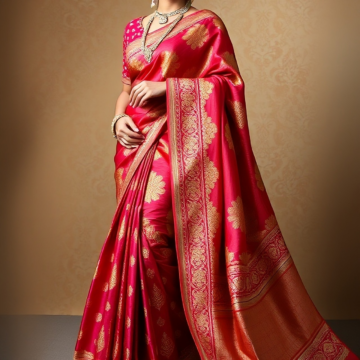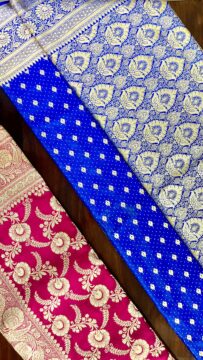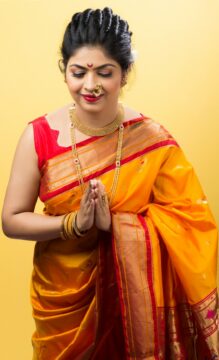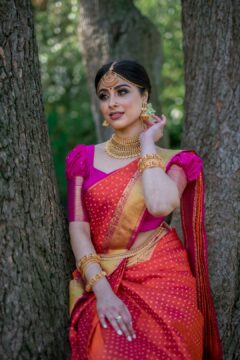
As the last diyas of Diwali flicker out, Varanasi’s weavers are already bent over their looms again — because wedding season is here. From late November through February, mandaps go up across the country, and somewhere between the mehendi ceremony and the reception, every bride, guest, and mother-of-the-bride is asking the same question: which Banarasi saree do I wear, and to which function? This year, one fabric is quietly stealing the spotlight for daytime functions: Banarasi organza.

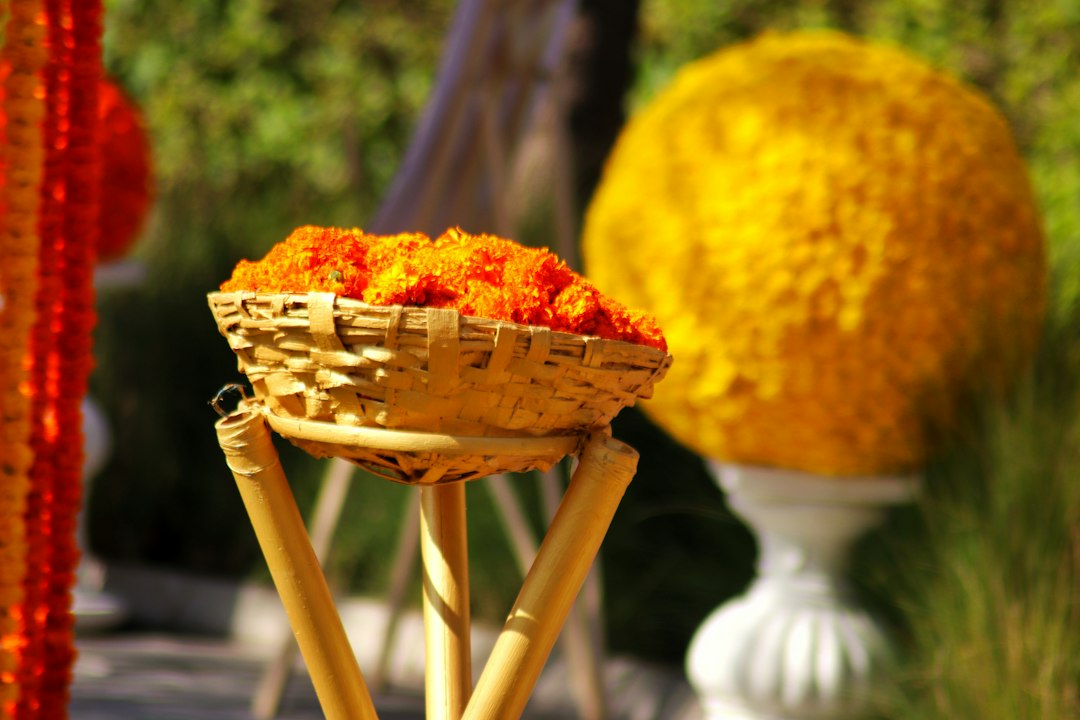
Photo by Saubhagya gandharv on Unsplash
What Makes Banarasi Organza Different
Organza is the featherweight cousin of the classic Katan silk saree you already know from Varanasi. Where Katan is dense, warm, and built for the main ceremony, organza is sheer, crisp, and almost translucent — woven on the same handlooms, by the same families of weavers, but with a finer thread count that lets it catch light rather than hold weight. A handwoven Banarasi organza saree still carries the signature zari borders and buttis that define the craft; it’s simply lighter on the body and gentler in warm, crowded wedding halls. That combination — heritage weaving with everyday wearability — is exactly why it’s become the fabric wedding-season shoppers are searching for this year.
Matching Your Banarasi Saree to Each Wedding Function
A well-planned wedding wardrobe isn’t one saree repeated four times — it’s four fabrics chosen for four different rooms. Here’s how Varanasi’s weavers themselves would sequence it:
- Mehendi and Haldi: Reach for organza. Its sheer texture breathes through daytime functions and photographs beautifully against turmeric yellows and marigold oranges without feeling heavy.
- Sangeet and Cocktail Night: A Chiffon Banarasi saree drapes with more movement, which matters when you’re dancing until midnight — it flows rather than fights you.
- The Wedding Ceremony: This is where a Katan Silk Banarasi saree earns its place. Its richness and structured zari work are made for the moment the pheras happen.
- Reception: A Soft Silk Banarasi saree gives you shimmer and drape without the full ceremonial weight, ideal for an evening of photographs and greetings.
Reading the Weave Before You Buy
Because organza is sheer, flaws show up more easily than they would on a heavier silk — which makes it worth knowing what you’re looking at before you buy. A genuine handwoven Banarasi organza saree should feel crisp but not stiff, hold a slight sheen without looking plasticky, and show the zari motifs woven directly into the fabric rather than printed or pasted on. Run a finger along the border: hand-thrown zari has a faint texture and irregularity that power-loom imitations don’t. If a saree feels papery-thin or the motifs look perfectly uniform edge to edge, it’s worth asking the seller directly whether it’s handloom or power-loom — a legitimate Varanasi weaver-backed brand will always tell you.

Photo by Squade Arrow on Unsplash
Styling Tips for Your Organza Banarasi Saree This Wedding Season
Organza’s sheerness is a styling advantage once you know how to use it. A few pointers our stylists give every wedding-season shopper:
- Blouse pairing: Because the fabric is translucent, an opaque contrast blouse — think deep bottle green with a gold-toned organza, or maroon with ivory — reads far more polished than matching the blouse to the saree exactly.
- Jewelry: Let the saree stay light and put your statement piece in your jewelry — a temple-style necklace or jhumkas carry a daytime organza look without over-decorating the outfit itself.
- Draping: A simple Nivi drape with a slightly looser pallu lets the sheerness and the light catch the zari border as you move, which is exactly the effect that makes organza photograph so well outdoors.
- Footwear and layering: Given how light the fabric is, a low block heel keeps the overall silhouette grounded, and a light shawl works if the function runs into a cooler evening.

Photo by Markus Winkler on Unsplash
Caring for Your Handwoven Silk Saree
A handwoven saree is meant to outlast the wedding season it was bought for — sometimes by decades. A few habits protect that investment: always dry clean rather than hand-wash a zari-bordered piece, since water can dull the metallic thread over time. Store it wrapped in a soft muslin or cotton cloth rather than plastic, which traps moisture and yellows the fabric. Refold along a slightly different line every few months so the same crease doesn’t wear thin or crack the zari, and keep it away from direct sunlight during storage. If you’re travelling to a wedding, roll rather than fold the saree inside your suitcase — it arrives with far fewer crease marks to steam out before the function.
Frequently Asked Questions
What’s the real difference between organza and Katan silk Banarasi sarees?
Katan silk is a denser, pure silk weave with more heft and warmth, traditionally worn for the main ceremony. Organza uses a finer, sheerer weave on the same handloom techniques, making it lighter and better suited to daytime or warm-weather functions.
Can I wear an organza Banarasi saree for the main wedding ceremony?
You can, especially for an outdoor or daytime wedding, but most brides and guests still reserve Katan or soft silk for the ceremony itself and save organza for mehendi, haldi, or a daytime reception.
How do I know if a Banarasi saree is genuinely handwoven?
Look closely at the border and motifs — handloom zari has slight, natural irregularity, while power-loom or printed imitations look uniform. A saree sourced directly from Varanasi’s weaver community, with the maker’s process disclosed, is your best guarantee of authenticity.
Shop Wedding-Ready Banarasi Sarees at Kashi Sarees
Every saree in our collection is handwoven by weaver families in Varanasi, the same artisans who have carried this craft through generations. Whether you’re building a full wedding wardrobe or shopping for a single function, explore our full shop, or go straight to our Katan Silk, Chiffon, and Soft Silk collections to start planning function by function. This wedding season, wear the weave — and the story — of Varanasi.