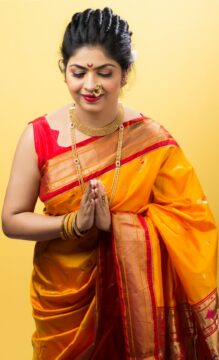
Bhai Dooj falls on Wednesday, 11th November 2026, closing out the Diwali festival week with one of its warmest rituals — a sister applying tilak to her brother’s forehead, waving a diya in aarti, and praying for his long life, while he promises to protect her in return. It is the quieter, more intimate cousin of Raksha Bandhan, usually celebrated at home rather than at a big gathering, and it carries its own tradition of gifting: brothers giving sisters something to mark the day, often a saree. If you are shopping for a Banarasi katan silk saree for Bhai Dooj this year — whether you’re the sister choosing her own, or a brother picking one as a gift — here is a practical guide to the fabric, colours, and styling that suit the occasion. (Still finalising your main Diwali look first? Our Diwali saree guide covers the Lakshmi Puja evening in detail.)
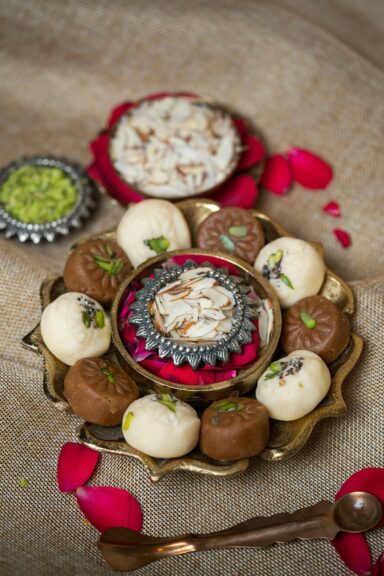
Photo by rish kumar on Unsplash
Why Bhai Dooj Calls for a Banarasi Katan Silk Saree
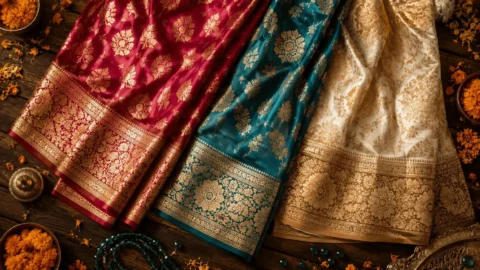
Bhai Dooj is a short ceremony with a lot riding on it emotionally — one of the few days built entirely around one sibling honouring another. A Banarasi katan silk saree, woven from pure twisted mulberry silk on a traditional handloom in Varanasi, carries exactly that kind of weight: it is not an everyday fabric, and wearing one signals that the morning’s ritual matters. The dense zari border catches the light of the diya during aarti the same way it has for generations of women performing this exact gesture, and the saree’s structured drape holds its pleats through the tilak, the aarti, and the photographs that follow.
Choosing Your Fabric: Katan Silk, Soft Silk, or Chiffon
Not every Bhai Dooj morning calls for the same weight of silk, and the right choice often comes down to how the rest of your day looks.
Katan Silk is the richest, most ceremonial option — pure silk warp and weft with dense, intricate zari work. It suits a Bhai Dooj followed by a proper family lunch, since it holds its structure and shine for hours.
Soft Silk is the more forgiving, everyday-festive choice — lighter on the body, easier to manage if you’re also cooking or hosting before your brother arrives, while still carrying the woven zari and Banarasi sheen.
Chiffon Banarasi sarees are the lightest of the three, a good fit if Bhai Dooj in your family is a brief, low-key visit — a quick tilak, a sweet, and a cup of chai.
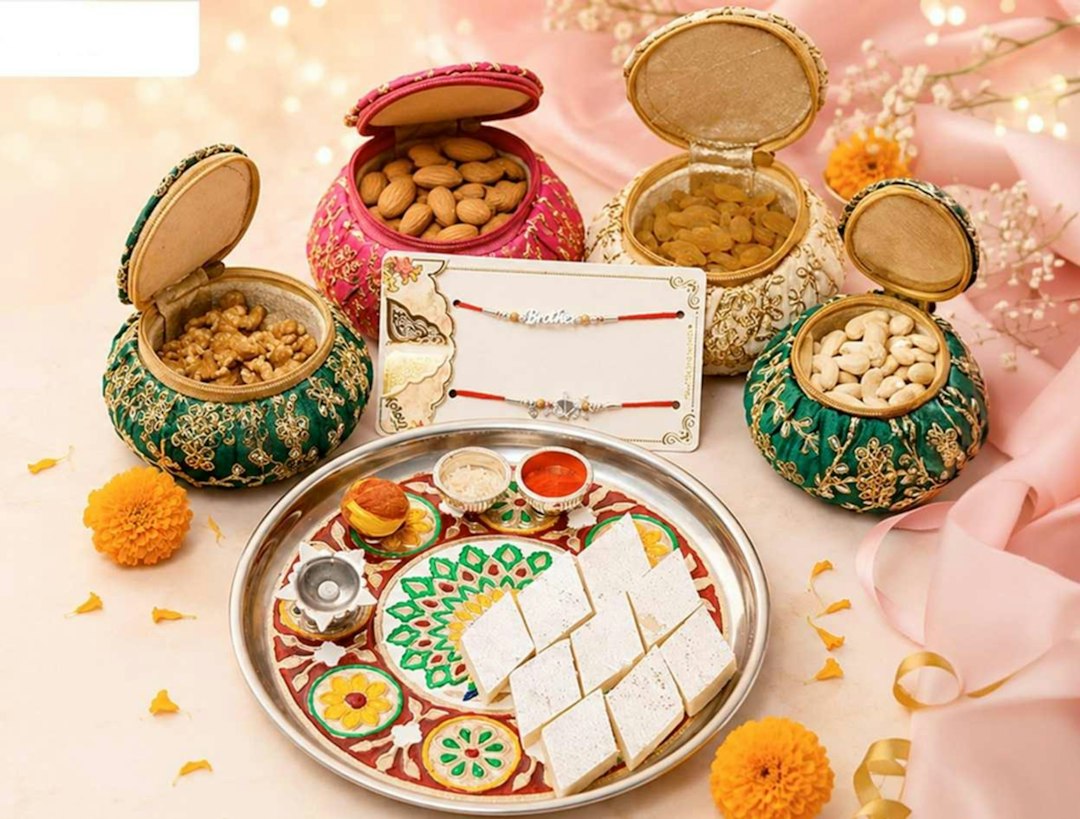
Photo by Sumit Kumar on Unsplash
Matching Your Saree to the Bhai Dooj Ritual
Because Bhai Dooj is one concentrated ritual rather than a multi-day festival, it helps to think about the morning’s actual sequence:
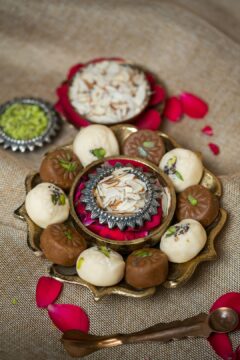
- The tilak and aarti: The moment most likely to be photographed. A Katan silk saree in a rich, traditional colour earns its place here — it’s brief, so the heavier drape is no burden.
- Preparing the thali beforehand: If you’re assembling sweets and dry fruits before your brother arrives, Soft Silk or Chiffon is more practical for moving around the kitchen.
- The family meal afterward: A Soft Silk saree in a jewel tone keeps you festive through a longer, more relaxed lunch.
The Best Colours for a Bhai Dooj Saree
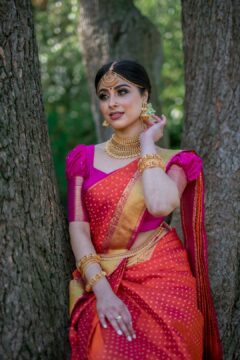
Red, maroon, and gold remain the classic choices, continuing the auspicious palette of the Diwali week that Bhai Dooj closes. A deep red or maroon Katan silk saree with a gold zari border photographs beautifully against diya light during the tilak. Marigold-yellow and orange are also auspicious and tie in nicely if your Diwali decorations are still up. For a different take, many younger women now choose jewel tones — emerald, royal blue, or wine — in a Soft Silk weave, which feels festive without repeating the exact look worn for Diwali itself just days earlier.
A Brother's Guide to Gifting a Banarasi Saree This Bhai Dooj
If you’re a brother shopping for your sister rather than for yourself, a few pointers make the choice easier. Fabric over flash: a Soft Silk saree in a colour she already wears well is a safer gift than an elaborate Katan piece in a colour you’re guessing at. Check her blouse size, or buy a saree with enough fabric and an unstitched blouse piece — getting this wrong is the most common gifting misstep. Think about occasions she actually has coming up, too: a Chiffon or Soft Silk piece she can wear again for a family dinner often gets more use than a bridal-weight Katan saree saved for "someday." Keep the receipt handy as well — most brands, ours included, will happily help with an exchange once she’s seen it in person.
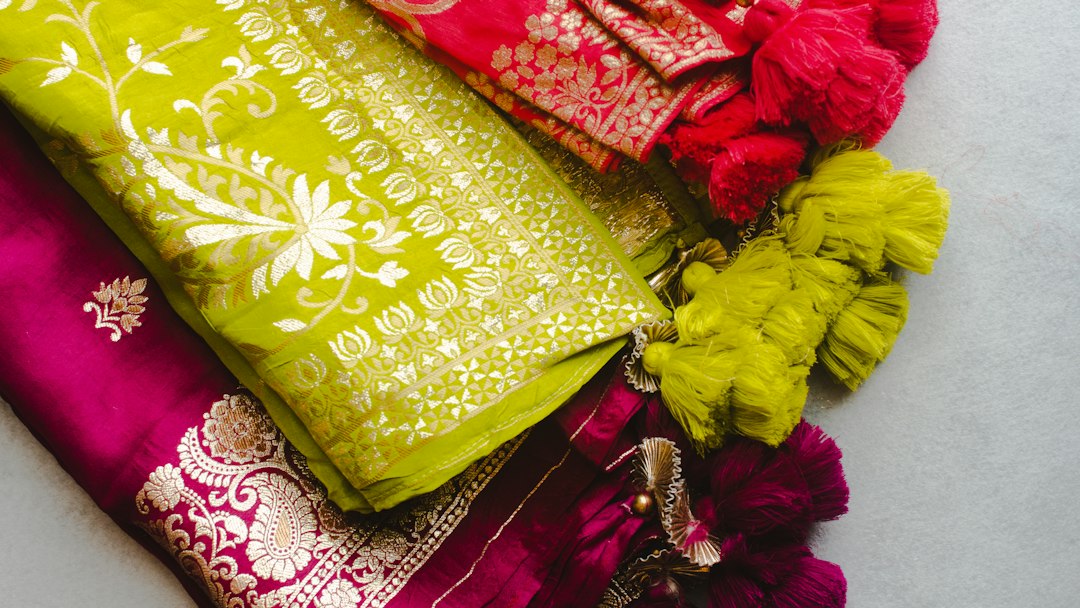
Photo by Jainica Dhingra on Unsplash
Styling Tips for Your Banarasi Saree on Bhai Dooj
A few simple choices make the morning easier and the photographs better:
- Blouse: A solid-colour silk blouse in gold, maroon, or bottle green lets a heavily worked Katan border stand out.
- Jewellery: Temple jewellery, gold jhumkas, and simple bangles suit the occasion’s warmth better than minimalist pieces.
- Draping: A classic Nivi drape with the pallu pinned at the shoulder keeps everything neat through the tilak and photos.
- Finishing touches: A simple bindi and a low bun with fresh flowers round off the look.
Caring for Your Handwoven Banarasi Silk Saree
A genuine handwoven Banarasi saree should comfortably outlast many Bhai Doojs to come, provided it’s looked after properly:
- Dry clean only — especially Katan silk, since home washing can dull or tarnish the zari.
- Store wrapped in soft muslin or cotton cloth, never plastic, which traps moisture and can yellow the fabric.
- Keep perfume and hairspray off the fabric itself — apply these before draping, since zari marks easily.
- Refold along different lines every few months in long-term storage, so creases don’t become permanent.
- Iron on a low, silk-safe setting, with a thin cotton cloth over the zari border, to protect its shine.
Frequently Asked Questions
Is Katan silk too heavy for just a short Bhai Dooj ceremony?
Not at all — since the ritual is brief, Katan’s heft works in its favour. Soft Silk or Chiffon suit a day with more movement, like hosting or cooking beforehand.
What colour should a brother choose if he’s buying a saree as a gift?
Red, maroon, and gold are always safe. If you know her go-to colours, a Soft Silk saree in one of her preferred jewel tones is a thoughtful alternative to the expected red.
How is a Bhai Dooj saree different from one bought for Diwali?
They can overlap, but since Bhai Dooj falls just days after Diwali, many women pick a different colour or a lighter fabric so the look doesn’t feel repeated within the same festive week.
Shop Bhai Dooj-Ready Banarasi Sarees at Kashi Sarees
Every saree we sell is handwoven by weaver families in Varanasi, the city where festivals like Bhai Dooj have been marked with new silk for generations. Whether you choose the ceremonial richness of Katan Silk, the easy comfort of Soft Silk, or the light drape of Chiffon, explore our full shop to find the handwoven saree that marks this Bhai Dooj the right way.