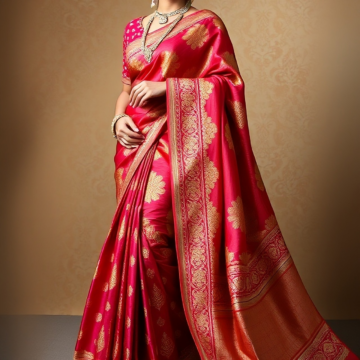
As the diyas are lit and the scent of marigold drifts through every courtyard, Diwali asks for a saree that holds its own quiet glow. For generations, the handwoven Banarasi silk saree from Varanasi has been the first choice for the festival of lights — not because it is trendy, but because its zari work catches candlelight the way machine-made fabric simply cannot. If Diwali saree shopping is on your list this year, here is a practical, no-fluff guide to choosing, styling, and caring for an authentic Banarasi silk saree, with a close look at why Soft Silk has become the season’s most-asked-for fabric.

Why Banarasi Silk Remains Diwali's Most Trusted Choice
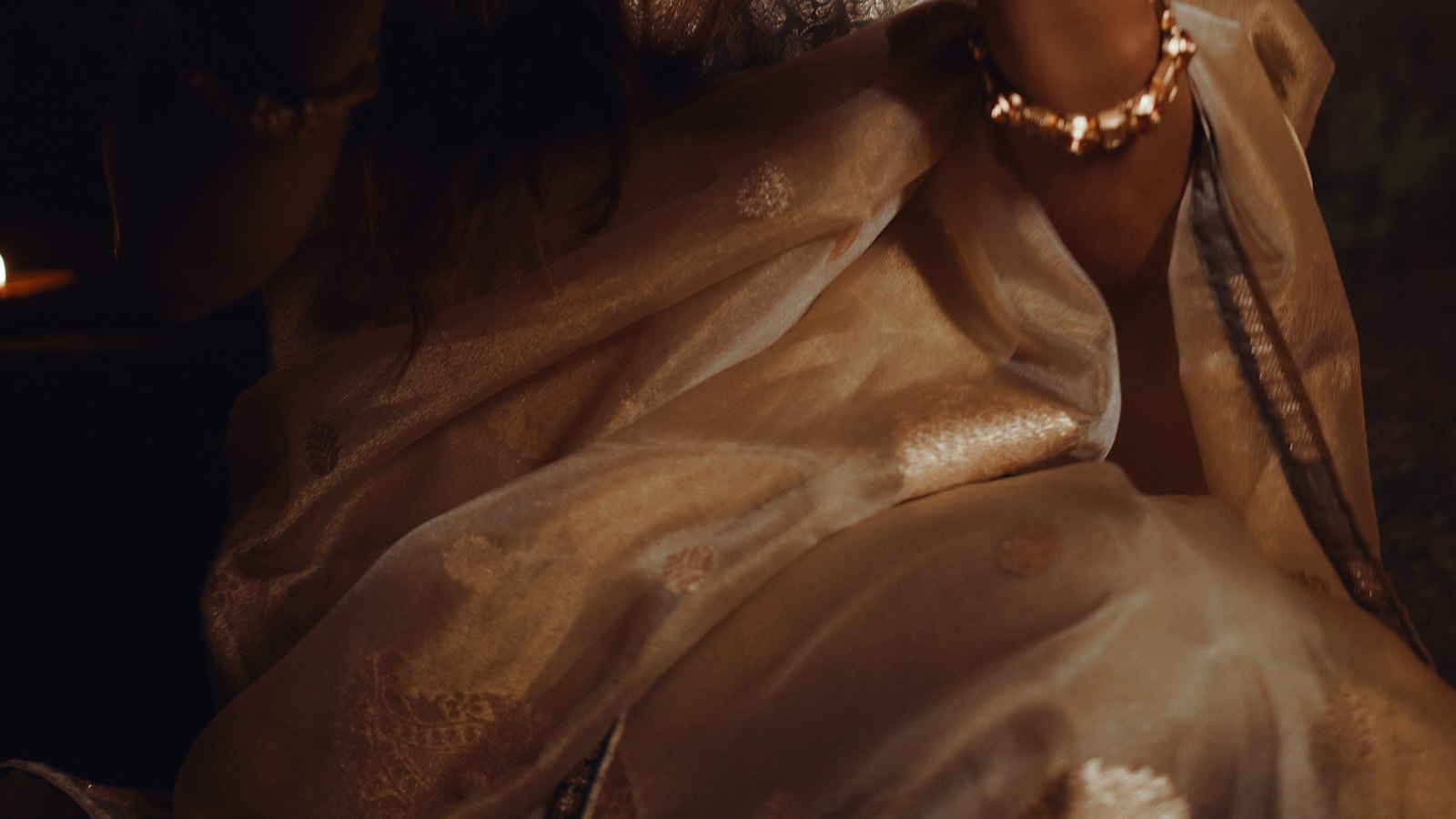
Long before “festive wear” became a shopping category, Banarasi silk was already Diwali’s default. Varanasi’s weavers have spent centuries perfecting the art of interlacing silk yarn with real zari, so the finished saree does more than sit on the body — it catches every flicker of diya light and throws it back. A Banarasi saree also carries an emotional weight that newer fabrics don’t: it is often the saree a mother wore to her own first Diwali as a bride, later passed down as a Diwali gift to a daughter or daughter-in-law. Choosing one this year isn’t just a style decision, it’s continuing a thread that runs back to the ghats of the Ganga.
Soft Silk vs Katan Silk: Which Fabric Suits Your Diwali Plans?
Not every Diwali evening calls for the same weight of silk, which is why fabric choice matters as much as color. Katan Silk is the purest, most traditional Banarasi weave — pure mulberry silk in both warp and weft, woven with dense zari work that gives it real heft and a stiff, regal drape. It’s the fabric to choose for the main Lakshmi Puja evening or a big family gathering, where you want a saree that photographs beautifully and holds its pleats through hours of standing and greeting guests. Browse our handwoven Katan Silk collection for pieces built exactly for that moment.
Soft Silk, on the other hand, has become the season’s favourite for a simple reason: it gives you the same Banarasi richness — the zari borders, the woven motifs, the sheen — in a fabric that is noticeably lighter and easier to manage for a full evening of pujas, rangoli-making, and running after excited kids with sparklers. If your Diwali involves multiple functions across several days, a Soft Silk Banarasi saree from our Soft Silk edit is the more forgiving, all-day choice without compromising on the handwoven authenticity.
For a lighter pre-Diwali get-together, a Dhanteras shopping trip, or an office Diwali party, a Chiffon Banarasi saree is worth considering too — it keeps the signature zari border and pallu work but drapes with far less bulk, which makes it easy to move in and simple to carry through a long day. Our Chiffon collection is a good place to start if this is the look you’re after.

Photo by Dhruv vishwakarma on Unsplash
Matching Your Banarasi Saree to Each Diwali Occasion
Diwali is rarely just one event, so it helps to plan your saree by occasion rather than buying one “festive” piece and repeating it everywhere:
- Lakshmi Puja evening: A rich red, maroon, or deep green Katan Silk or Soft Silk saree with heavy gold zari — this is the moment for your most opulent piece.
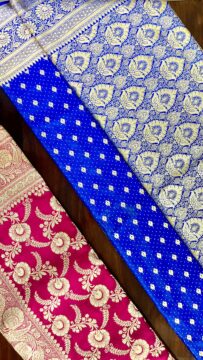
- Family gatherings and Bhai Dooj: A mid-weight Soft Silk saree in jewel tones (emerald, royal blue, wine) gives you festive presence without the formality of full bridal zari.
- Office parties or friends’ get-togethers: A pastel or lighter-toned Chiffon Banarasi with a contrast border keeps things elegant but comfortable for a longer, more casual evening.
- Diwali morning or Govardhan Puja visits: A simpler Soft Silk saree in warm ivory or gold tones works well for daytime rituals and photographs softly in natural light.
Styling Tips for a Radiant Diwali Look
A handwoven Banarasi saree already does most of the work, but a few styling choices make the difference between “nice” and genuinely festive:
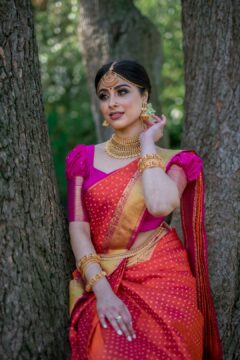
- Jewelry: Let the zari lead. Temple jewelry or antique gold jhumkas complement the traditional weave far better than modern minimalist pieces — save the delicate diamond studs for another day.
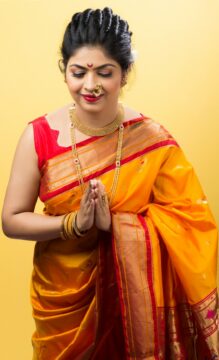
- Blouse: A contrast silk blouse in a solid, saturated colour (think a maroon saree with a bottle-green blouse) makes the border and pallu stand out, especially in photographs and under warm Diwali lighting.
- Draping: The classic Nivi drape, with pleats pinned neatly at the waist, keeps you comfortable through a long evening of standing for aarti and greeting guests without constant readjusting.
- Hair and finishing touches: A low bun with fresh mogra or a single gajra, paired with a maang tikka, rounds off the look without competing with the saree’s own detailing.
- Weather note: Since Diwali in most of India falls in cooler evening weather, a light silk shawl or dupatta over the shoulder works as both a practical layer and an extra styling element.

Photo by Madhurima Basak on Unsplash
Caring for Your Banarasi Silk Saree After the Celebrations
A genuine handwoven Banarasi saree, cared for properly, easily lasts decades and only grows more valuable with time. A few habits protect that investment:
- Dry clean only — especially pieces with real zari, since water and regular detergent can dull or tarnish the metallic thread.
- Store it wrapped in muslin or soft cotton cloth, never in plastic, which traps moisture and can yellow the silk over time.
- Avoid direct contact with perfume, deodorant, or hairspray on the fabric itself — spritz these before draping, not after.
- Air it out for a few hours after wearing, away from direct sunlight, before folding it away.
- Re-fold along different lines every few months so permanent creases don’t weaken the silk or the zari along the same fold line year after year.
Where to Find Authentic Handwoven Banarasi Sarees This Diwali
With Diwali shopping picking up pace, it’s worth buying early from weavers you can trust rather than settling for a rushed, last-minute choice. Every Kashi Sarees piece is handwoven in Varanasi by artisans carrying forward generations of craft, not mass-produced with printed zari. Start with our Katan Silk range for the most traditional, heirloom-grade drape, explore Soft Silk for a lighter option that still carries full festive richness, or check our Chiffon pieces if you want something easy to wear across a busy, multi-day festival calendar.
However you choose to celebrate this Diwali, a Banarasi silk saree woven by hand in Varanasi brings something no factory-made alternative can — the warmth of tradition, the skill of a craft passed down through generations, and a glow that, much like the festival itself, only gets richer with time.