Fifteen days after the last Diwali diya burns out, Varanasi lights a million more — along its ghats, on the river itself, in every lane leading down to the Ganga. Dev Deepawali, the “Diwali of the Gods,” falls on Kartik Purnima this year, 24th November 2026, and it is arguably the one evening Varanasi looks exactly as beautiful as the postcards promise. For the women who live here, and the growing number who travel in just to see it, what to wear is not an afterthought — it’s part of the ritual. If you’re shopping for a Banarasi silk saree for Dev Diwali this year, here is a practical guide to choosing, styling, and caring for one, drawn from what our weavers’ own families reach for on this night.
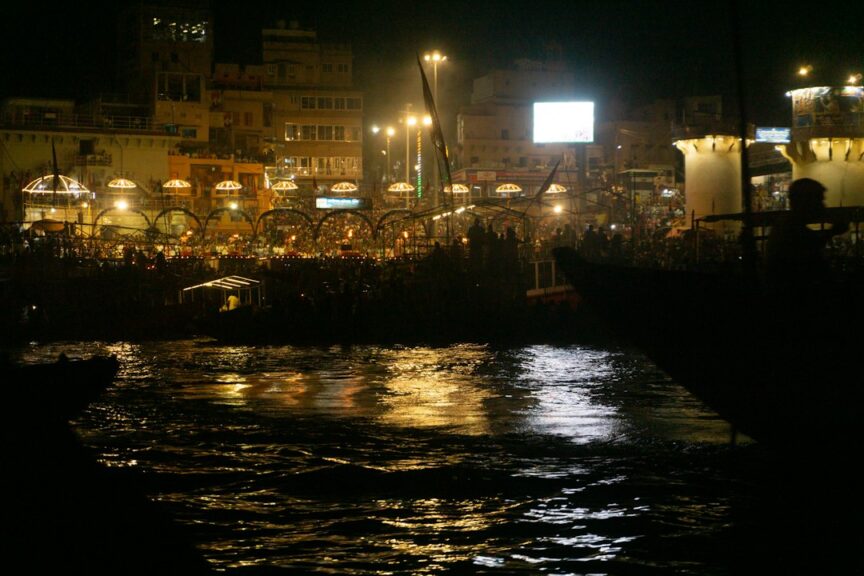
Photo by Kishor Kumar C K on Unsplash
What Is Dev Deepawali, and Why Varanasi Wears Its Best Silk
Dev Deepawali marks the day, legend says, that the gods descended to Varanasi’s ghats to bathe in the Ganga and celebrate Lord Shiva’s victory over the demon Tripurasura — hence “the Diwali of the Gods.” Every ghat, from Assi to Rajendra Prasad, is lined with lakhs of earthen diyas, the river carries its own floating constellation of lamps, and families gather for Ganga aarti, puja at home, and reunions that often spill into the following week. This year the date carries extra weight for saree shoppers: 24th November also opens the season’s first run of wedding muhurat dates, so for many households, Dev Deepawali doubles as the evening that unofficially starts wedding season. A handwoven Banarasi silk saree simply belongs on a night this tied to the city’s own identity.
Choosing the Right Fabric for a Ghat-Side Evening
Dev Deepawali isn’t one event but several — a puja at home, a walk down to the ghats, perhaps a boat out onto the river to see the lamps from the water — and each asks something different of what you wear.
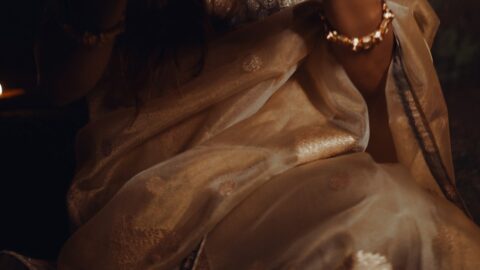
Katan Silk, Varanasi’s purest and most structured weave, is the right choice for the puja itself or a family gathering indoors. Its dense zari and stiffer drape hold their shape beautifully through a long evening of aarti, photographs, and relatives arriving one after another — this is the saree your grandmother would call “proper” for the occasion.
Soft Silk is the more forgiving pick if your evening involves standing at the ghats watching the lamps go down the river. It still carries real zari shimmer — diya light flatters a woven border in a way no artificial light quite matches — but drapes lighter and moves easier through a crowd.
If you’re taking a boat out to see the ghats from the water, or simply prefer the least weight on your shoulders, a Chiffon Banarasi saree is worth considering — the same handwoven border in a far breezier fabric, which helps once the Ganga’s evening chill sets in.
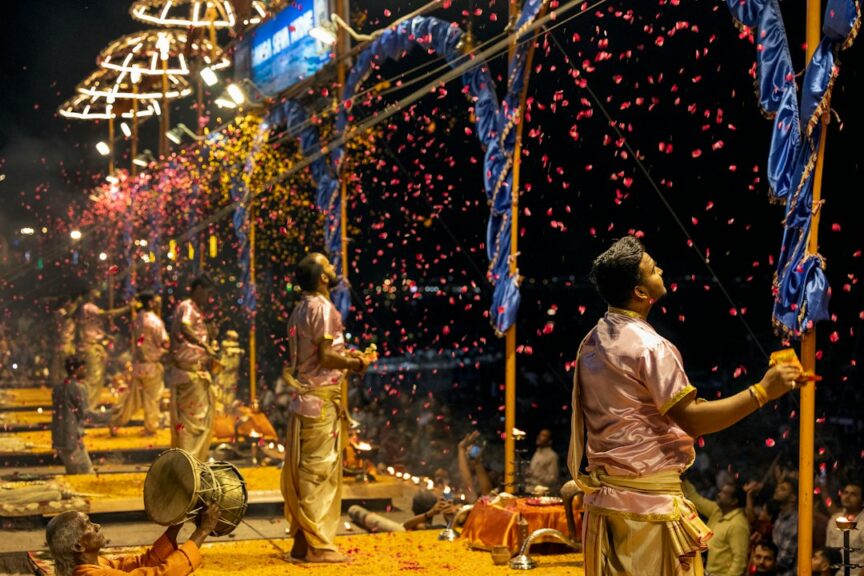
Photo by Azim Khan Ronnie on Unsplash
Colors and Motifs That Belong to the Evening
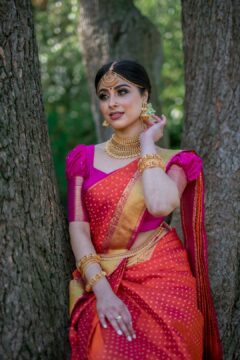
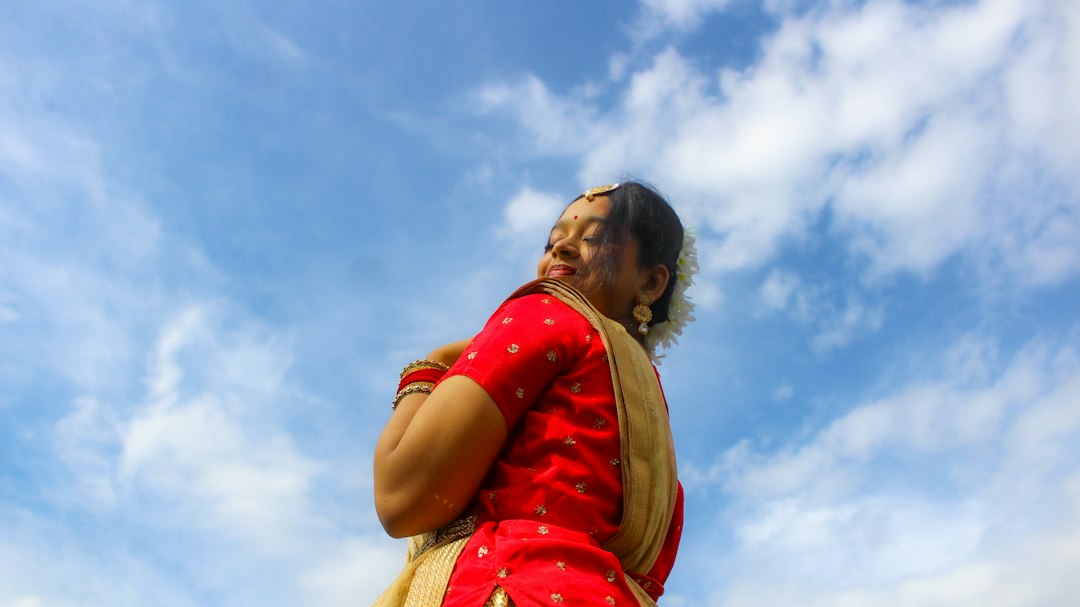
Dev Deepawali’s palette is written by firelight, so deep, warm shades read best: marigold gold, maroon, rust, and deep red all catch diya glow the way a pastel simply can’t. Motifs that echo the occasion — diya and temple-arch borders, jaal work that mimics a field of small flames, booti patterns scattered like sparks — are a lovely, subtle nod to the festival itself without being literal about it. A saree with a slightly darker ground and a bright, dense zari border tends to photograph best after dark, when most of this evening’s memories get made.
Styling Tips for a Dev Deepawali Evening
- Blouse: A solid-colour silk blouse in deep green, maroon, or gold lets a heavily worked pallu stay the focus rather than competing with a busy print.
- Jewellery: Keep it to temple-style gold or jhumkas. The ghats themselves will be doing the sparkling tonight — your jewellery doesn’t need to compete with a river full of lamps.
- Draping: Pin the pallu securely at the shoulder before you leave the house. Between the walk down to the ghats and the crowds once you’re there, a loose pallu is the first thing to go astray.
- Layering: Varanasi evenings turn genuinely cool by late November, so a light silk or pashmina shawl works as both warmth and a second layer of festive texture.
- Footwear: Flat juttis or a low block heel are the sensible choice on ghat steps — save the heels for an indoor function.
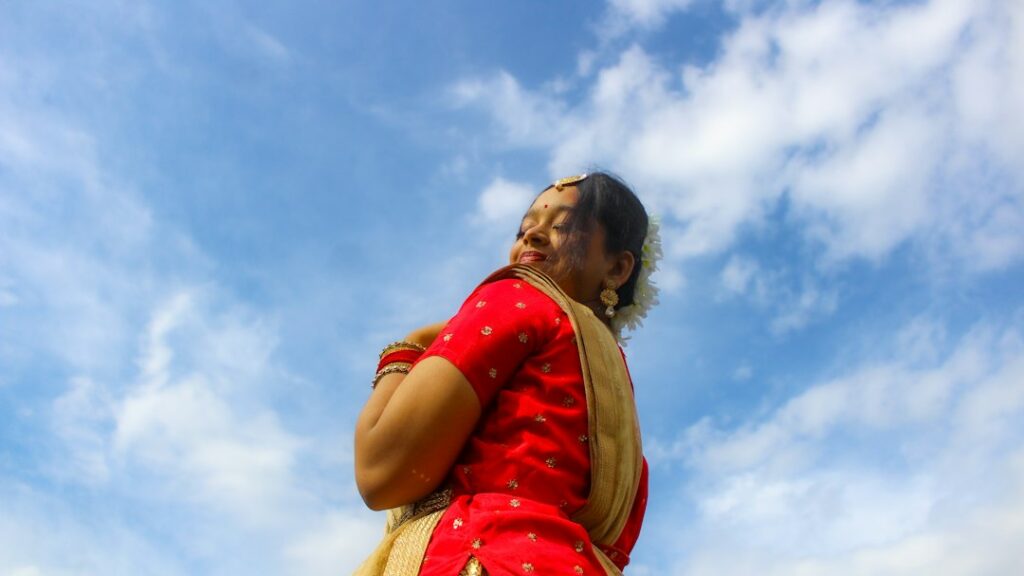
Photo by Mr Catographer on Unsplash
How to Spot a Genuine Handwoven Banarasi Saree
With so many power-loom and printed imitations sold under the Banarasi name, it’s worth knowing what you’re buying before the diyas are even lit. Turn the saree over: a genuinely handwoven piece shows small floating threads on the reverse where the zari motif changes, while a machine-made or printed copy looks uniformly clean on both sides. Run a finger along the border — hand-thrown zari has a faint, natural irregularity a power-loom imitation can’t replicate. A brand genuinely rooted in Varanasi’s weaving community will always tell you plainly whether a piece is handloom, because that origin is the entire point of what they’re selling.
Caring for Your Silk Saree After the Celebration
A handwoven Banarasi saree bought for one Dev Deepawali can easily be worn for the next decade of them, provided it’s looked after. Always dry clean rather than hand-wash a zari-bordered piece, since water and regular detergent dull the metallic thread over time. Store it wrapped in soft muslin or cotton rather than plastic, which traps moisture and yellows silk with time. Keep perfume and hairspray away from the fabric itself — spray these before you drape, not after — and re-fold along a slightly different line every few months so the same crease doesn’t weaken the silk or crack the zari.
Frequently Asked Questions
When is Dev Deepawali in 2026?
Dev Deepawali falls on Kartik Purnima, 24th November 2026 — fifteen days after Diwali, and it is celebrated most grandly along the ghats of Varanasi.
What’s the difference between Diwali and Dev Deepawali?
Diwali marks Lord Rama’s return to Ayodhya and is celebrated nationwide with Lakshmi Puja. Dev Deepawali, celebrated mainly in Varanasi, honours Lord Shiva’s victory over Tripurasura and is marked by lighting the river ghats themselves rather than just homes.
Which Banarasi fabric is best if I’ll be standing at the ghats for hours?
Soft Silk or Chiffon are the more forgiving choices for standing and walking through crowds, while Katan Silk suits an indoor puja or family gathering where you’ll be seated for longer stretches.
Shop Dev Deepawali-Ready Banarasi Sarees at Kashi Sarees
Every saree we sell is handwoven by weaver families here in Varanasi — the same city, the same ghats, that will be glowing with a million lamps this Dev Deepawali. Whether you’re drawn to the ceremonial richness of Katan Silk, the easy comfort of Soft Silk, or the light drape of Chiffon, you can explore the full handwoven collection in our shop and find the piece that will carry you through this Dev Deepawali — and the wedding season that follows close behind it.